2026
Collaborative
Engagement Activities
NOAA
Collaborative hosts training for Puget Sound communities to enhance adaptation planning with coastal hazards
Kenneth Tran, Puget Sound Climate Preparedness Collaborative

APCC attendees discussing adaptation options as part of a training activity. [Kenneth Tran/Puget Sound Climate Preparedness Collaborative]
Over 30 planning and climate adaptation practitioners from across the Puget Sound basin, representing city, county, state, Tribal, academic, private, and community organizations, gathered in Olympia on June 2, 2026, for the Adaptation Planning for Coastal Communities (APCC) training. The training was hosted by the Puget Sound Climate Preparedness Collaborative (Collaborative) and offered by NOAA’s Office for Coastal Management (OCM), with the aim of guiding attendees through the transition from vulnerability assessment results to an adaptation plan, specifically involving coastal hazards.
“APCC is a training designed to help communities who are moving from developing a vulnerability assessment into thinking more about adaptation plans and adaptation options,” said Jake Thickman, Resilience Specialist contractor with NOAA’s Office for Coastal Management and a facilitator for the training. “[NOAA] provides frameworks and structured processes to help give communities ideas that they can take back and implement when managing these complex challenges and evaluating the wealth of information that you can get from a vulnerability assessment.”
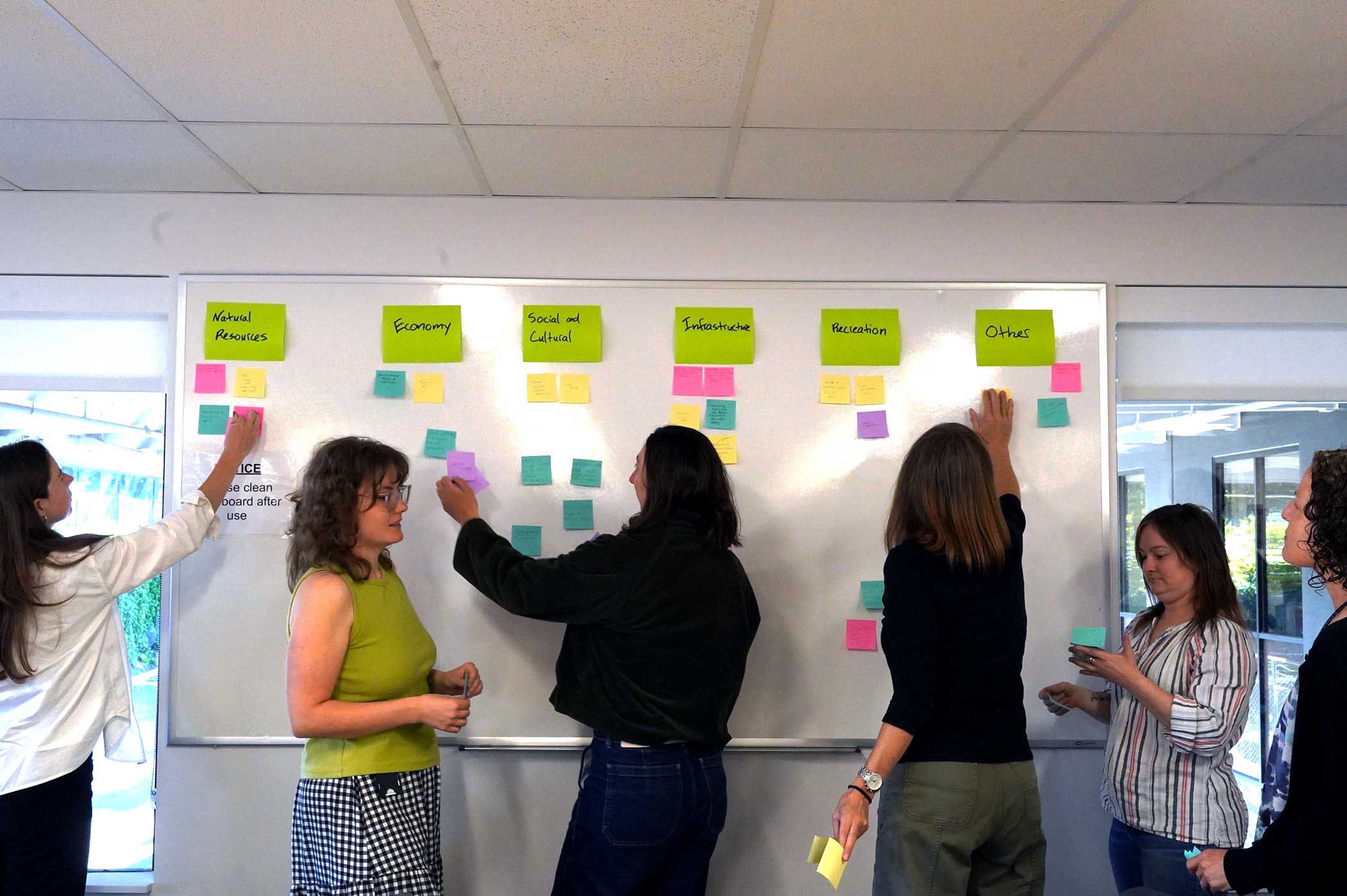
APCC attendees sorting their sticky notes into categories as part of a community visioning activity. [Kenneth Tran/Puget Sound Climate Preparedness Collaborative]
The training led attendees through a series of brainstorming activities to identify significant community assets that are vulnerable to climate impacts, and introduced vulnerability prioritization processes to rank assets on example sets of criteria, such as health and safety, co-location of vulnerable assets, and cultural significance.
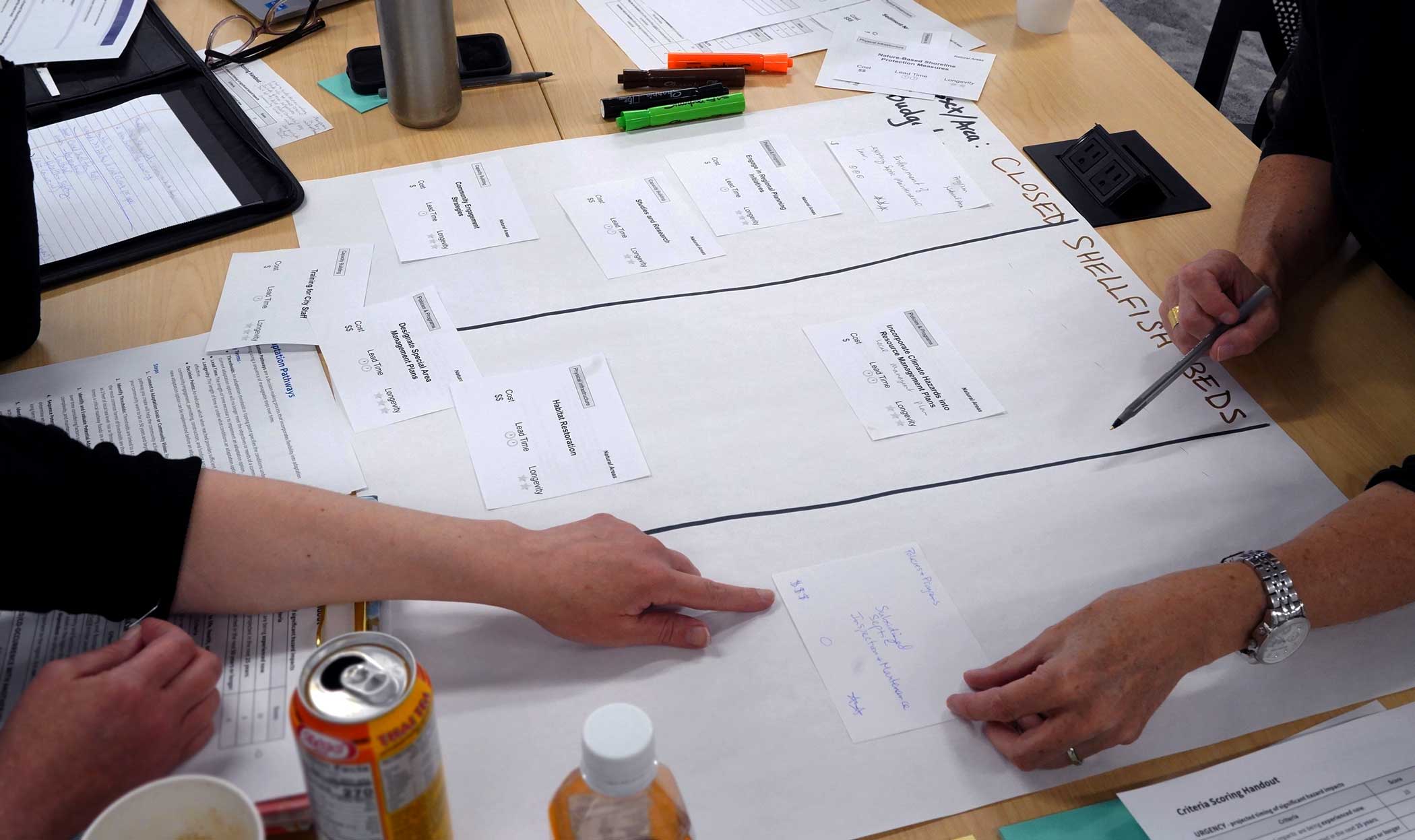
A group placing a series of adaptation options for closed shellfish beds in Island County into a sequence of short, medium, and long-term time ranges. [Kenneth Tran/Puget Sound Climate Preparedness Collaborative]
The training also introduced the Adaptation Pathways model, which sequences a series of adaptation options over time that are activated once pre-identified climate impacts conditions or thresholds are met. Attendees practiced applying the framework in groups for a local real-world scenario using an asset from their own community.
“This training is helpful because it’s a nice cross-section of different types of people – professional planners, tribal representation, and I’m the practical implementation side of the plans on the ground – so I appreciate the diversity of perspectives,” said Karin Sterlioff, the conservation program manager at Thurston Conservation District. “I also coordinate a program called Shore Friendly Thurston, and it’s specifically focused on marine shoreline management at the intersection between residential property owners and ecological function [...] this training helps me understand the framework to do better planning so that we can provide better assistance to the community.”

Attendees at the APCC training. [Kenneth Tran/Puget Sound Climate Preparedness Collaborative]
“I’m always impressed by the level of expertise that everyone brings to these training sessions,” said Jake Thickman. “I hope that this ultimately helps communities that are going through this adaptation process to be more informed and equips them with the foundational knowledge to be successful.”